Al-Tiri Strike: One Hour Separated Survival From Death
Paramedics rescued photojournalist Zeinab Faraj from rubble an hour before colleague Amal Khalil died in southern Lebanon.
By Avery Brooks ·
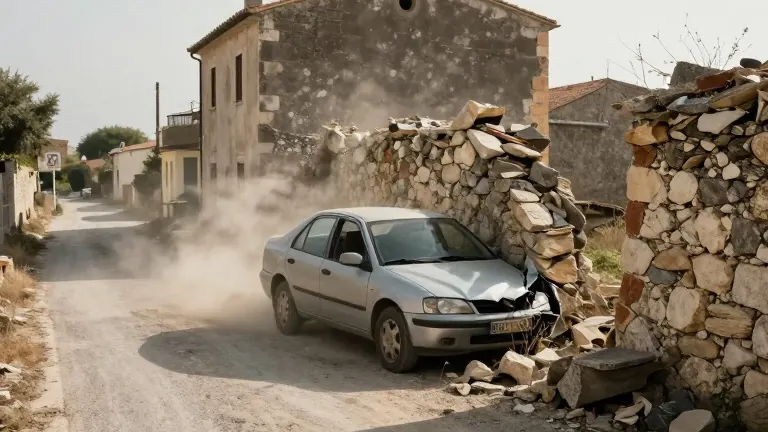
On April 22, 2026, a missile struck two cars in the Lebanese village of al-Tiri, killing veteran reporter Amal Khalil and leaving 21-year-old photojournalist Zeinab Faraj trapped under rubble. The attack occurred during a ceasefire that had been in effect for a month, raising immediate questions about why civilian journalists were targeted in a zone expected to be safe. The timing of the rescue proved decisive in the outcome, as Faraj was pulled to safety approximately one hour before paramedics were permitted to return for Khalil.
Khalil, 42, and Faraj, 21, had driven to the area to document the aftermath of the war. They were accompanied by Ali Nabil Bazzi, a 27-year-old municipal official, and Mohammed Hourani, a 37-year-old friend of the mayor. The group had met earlier at Tebnine governmental hospital, a location residents used as a base due to its relative safety. The first missile hit the vehicle carrying Bazzi and Hourani, setting it on fire. Faraj described seeing the men’s bodies torn apart, a sight that remains fixed in her memory.
Drones circled the scene as Khalil and Faraj made frantic calls to emergency services. Operators told them help was on the way, but paramedics later advised the women to drive back up the road because ambulances could not reach them. As they attempted to enter their car, a second missile struck the vehicle, throwing them backward. They took shelter in a nearby house where Khalil sustained visible injuries to her face, hand, and leg. Faraj sent a final message to her sister, stating, “There’s no hope left. Forgive me,” before her phone died.
While inside the bathroom, Faraj crawled to the road to watch for rescuers. A drone descended rapidly toward her face, forcing her to retreat inside. Minutes later, another missile hit the building, collapsing rubble onto Faraj. She described the weight as crushing, leaving her with difficulty breathing. A paramedic reached her shortly after, holding her shoulders while a colleague cleared the debris. He stayed beside her until they pulled her free as drones returned and a stun grenade was dropped nearby.
Faraj was transported to a hospital where nurses initially tried to reassure her about Khalil’s condition before falling silent. Khalil is believed to have died roughly an hour before the paramedics returned to the site. The Israeli military justified the strike by identifying saboteurs violating the ceasefire. Human rights groups have labeled the incident a war crime, noting that the military received repeated messages urging them to allow a rescue operation while the women were trapped.
The military had also shared a video of Khalil published by her newspaper a week prior, labeling it “terrorist media.” Khalil had previously received death threats from Israeli numbers. Faraj is now returning to university after completing her degree in radio and television. She still walks with a limp and has visible injuries to her hand and face, including a restricted eyebrow movement. She reports waking at night screaming and struggling with the sound of drones, a sensory trigger linked to the hours she spent under the rubble in al-Tiri.
Source: The Guardian